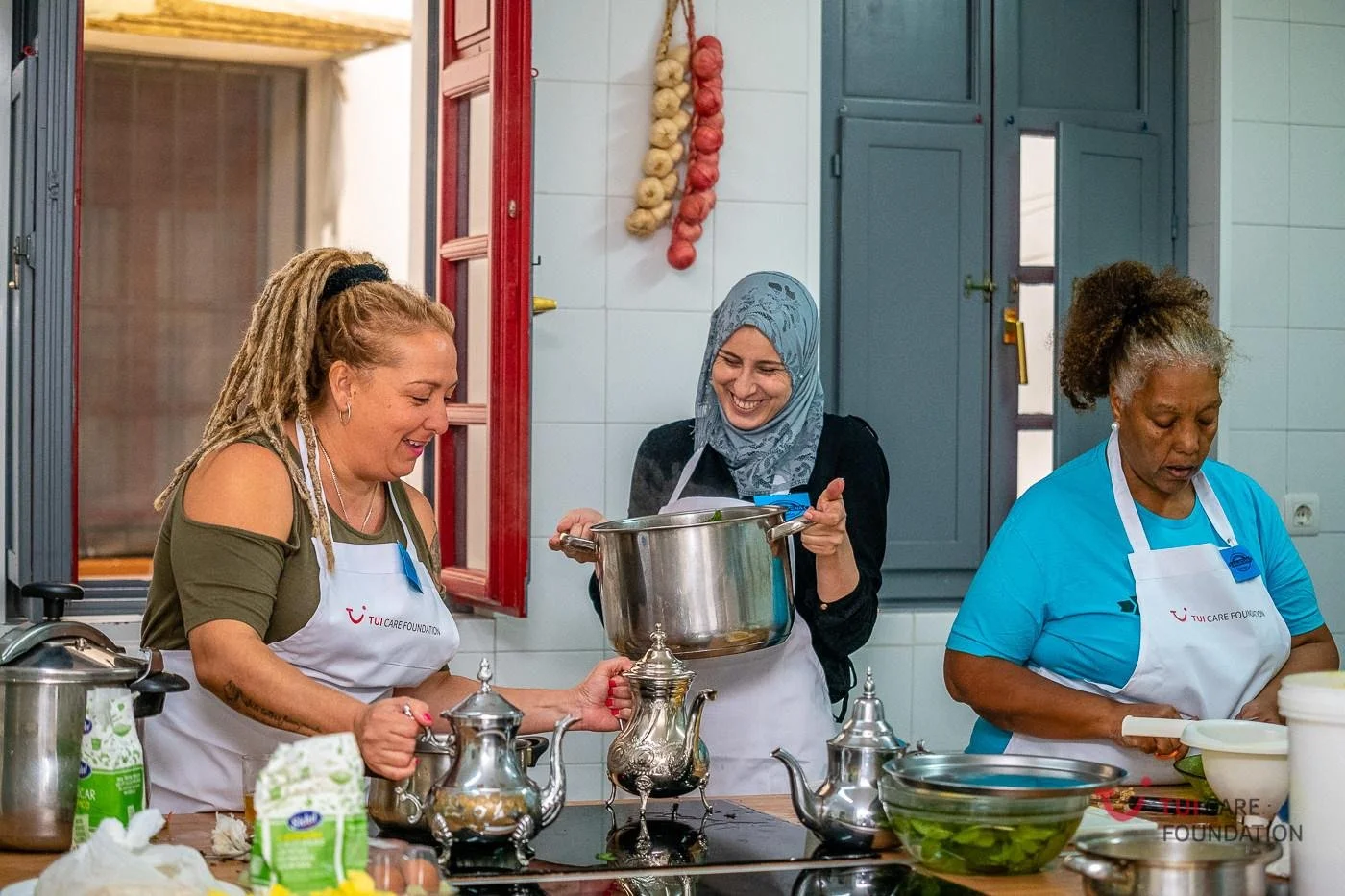
Empowering women through gastronomic tourism
Turning Local Challenges into Opportunities
Málaga is a globally popular destination, heavily dependent on tourism. However, the benefits of this economic activity have not always been equitably shared. In some working-class districts such as Trinidad and Perchel, unemployment rates have historically been much higher than regional averages — with women especially underrepresented in formal economic participation.
Recognising this challenge, local women organised under the association La Alacena del Corralón and began to tap into their own cultural and culinary knowledge — organising gastronomic activities in traditional courtyard homes (corralones) to generate income.

A Holistic, Sustainable Tourism Initiative
Together with support from Saxion University of Applied Sciences, the Municipality of Málaga, the gastronomic club Kilómetro 0, and funding from the TUI Care Foundation, the Flavours of Málaga project was born — providing women with training, business development support, and opportunities to offer authentic experiences to visitors.
This initiative’s core goals include:
Increasing women’s participation in the local workforce and reinforcing their socio-economic position.
Strengthening women’s entrepreneurial skills and leadership through targeted workshops and training.
Enhancing community livelihoods through sustainable, women-led tourism enterprises.
Demonstrating how women’s empowerment and sustainable tourism can synergize as a pillar of inclusive urban development.
In practical terms, this has meant supporting around 50–70 women and their families to develop authentic gastronomic tourism products — from guided market tours and cooking workshops to immersive experiences in historic local courtyards.
Why It Matters for Sustainability
The Flavours of Málaga project is more than just tourism — it’s a win for inclusive sustainable development. It demonstrates how:
Local culture and heritage become assets for community wellbeing, not just tourism attractions.
Empowerment and economic inclusion for women directly contribute to broader social sustainability.
Tourism platforms like Tourism4SDGs can highlight grassroots initiatives that align with the SDGs, especially those focusing on gender equality (SDG5), decent work & economic growth (SDG8), and sustainable cities & communities (SDG11).
This project shows the real impact that collaboration — between academia, local government, civil society, and the private sector — can have when sustainability is not an afterthought, but a guiding principle.
A Model for the Future
As Málaga continues to evolve as a sustainable tourism destination — embracing local gastronomy as a central part of its identity and economic strategy — Flavours of Málaga serves as a beacon of what responsible, inclusive tourism can achieve. It’s proof that sustainable development isn’t only about statistics and policy — it’s about empowering people, uplifting communities, and creating authentic experiences that benefit both residents and visitors alike.
Whether you’re a tourism professional, sustainability advocate, or community leader, Flavours of Málaga is a compelling example of how sustainability inputs — thoughtful planning, targeted investment, and collaborative action — can lead to initiatives that resonate locally and shine globally.